
Monday Media: The Many Melodramatic Layers of a Picture

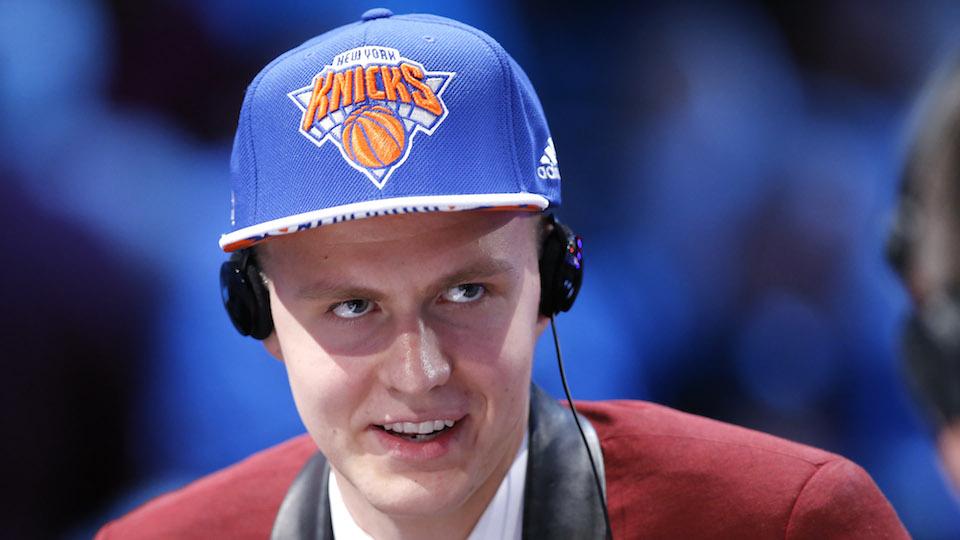
This is a picture of Kevin Durant wearing a hat.  This we can agree on.

But after that?  Well, it’s up to you.

My guess is when a person from Seattle sees the picture seen above, they mostly feel sad.  There are the obvious reasons — the last franchise player for the SuperSonics, wearing a nice classic snap-back depicting the colors and icons of the defunct franchise — but there are other reasons, as well.  It’s somewhat jarring to see the green hat perched atop the head of the Thunder’s past (which doesn’t exist), present and future as he wears the practice garb of the team the Sonics became.  Indeed, Kevin Durant’s exploits as a Sonic happened while he was a dazzling but imperfect rookie, youthfully playing while the team trudged its way in the through a grouchy, dour final season in Seattle. It’s not a terribly pleasant experience to immerse oneself in the realities of the brief Kevin Durant era in the Pacific Northwest, while at the same time, pondering what could have been if the stewardship of the Sonics had been more responsible, and the NBA was a much different place.

At the same time, a person from Oklahoma City might see this picture, and angrily say to themselves, What the hell, man?  No, the arrival of the team in the lower midwest (or, northeastern south? The eastern southwest?) was neither clean nor celebrated.  But hey, the team’s there, now.  It had a good run in Seattle, but now it’s in a place where it suffers through nightly sell-outs, national television appearances, and deep runs into the postseason.  The present is mighty fine, indeed, and Kevin Durant is a –if not the – major reason why.  To see KD wear a Sonics hat while he represents Oklahoma City (in the playoffs, no less) must feel a bit like seeing a new spouse wearing the wedding ring from a previous marriage.  Wear a Mariners hat, if you mustthat person from Oklahoma City might mutter, their mouths turned down in disgust.  But don’t wear a Sonics hat.  Be better than that.

But even more bizarrely, a person in Sacramento might see this picture, and feel anything from panic to frustration.  The battle for the Kings rages on (even as we speak), and through a remarkable series of events, California’s capitol city has become the sacrificial alter where a capitalist Binding of Isaac will almost certainly take place.  The outcome of this conflict is not known — despite what any source says, or any fan angrily declares, no one can predict the actions of millionaires and billionaires when actual money is at stake — and is not likely to be known any time soon.  But people still try and find meanings etched on walls, dropping lazily to the ground like tea leaves.  Surely there’s a meaning in KD wearing a Sonics hat, especially on this day, while the NBA and its shareholders meet in New York City to continue the discussion on how the execution of the Kings as we currently know them should be carried out.

A picture of Kevin Durant, taken on a mobile device, posted on the internet.  A simple, modern thing, really.

Yet, it is truly interesting how a picture depicting a singular image can carry so many meanings, for so many different people.  That, thankfully, will never change.

Posted in General | 2 Comments

Your Annotated Smartphone Bathroom Reader for Sunday, May 12th, 2013.

null
Maloofs Employ “Plan Middle Finger”
Ray Ratto
CSNBayArea.com

On Sunday, just when it seemed like things were wrapping up with the sale of the Sacramento Kings from the maligned Brothers Maloof, things went nuts again. Not only did Chris Hansen up the value of his bid by $70 million dollars (raising the price to a $625 million dollars, which is higher than the GDP of a number of nations) and the relocation fee, but the Maloofs let it be known that they will not accept the bid offered by Vivek Ranadive, the city of Sacramento and the NBA. Instead, they will offer 20% of the Kings to Hansen, and sour the relationship between the harassed fanbase and the team. Ray Ratto summarizes the proceedings nicely here. As he correctly points out: “the Maloofs are telling Sacramento at the moment of its greatest imagined triumph that no one can put a price tag on spite.” Go Ray!

–JG

Waiting in the Wings: Adam Silver
Paul Rogers
Sonics Rising

In February 2014, right after All Star Weekend, NBA commissioner-elect Adam Silver will take the wheel from out-going commissioner David Stern, and assume control of the multi-billion dollar corpration and global brand. When that happens (and depending on what happens with the Sacramento Kings), the biggest question for the new commish will likely center on the prospect of expansion, in Seattle and elsewhere. Will Adam Silver revisit the possibility of expanding the league? Paul Rogers does a close investigation into various secondary sources in an attempt to make an assertion. He concludes that while Silver’s attachment to his mentor and boss is troubling for traumatized Sonics fans, Silver generally seems more amenable towards seeing franchises as “public trusts” rather than simply assets that can be bought, sold and moved. This is useful work from Rogers.

–JG

Racial Discrimination Among NBA Referees (2007)
Joseph Price & Justin Wolfers
National Bureau of Economic Research

I happened across this paper while surfing the internet, and I will have to reread it a number of times. In the journal-length article, Price and Wolfers assert that, when it comes to winning — quantified through the relative calling of fouls — that ” these observable game outcomes are themselves the product of biased evaluation by referees.” Additionally, they assert that, “in light of the mismatch between the composition of the players (around four-fifths of whom are black) and their evaluators (around two-thirds of referees are white in our sample), an own-race preference may drive an aggregate bias against blacks (or for whites).” In my first reading, I was impressed with the depth of Price and Wolfers’ analysis. They include an impressive amount of data about biases with black and “white” (including Asian and Hispanic) players and refs, and reference a wide range of sources. At the same time, it seems problematic to try and quantify “racism” through foul calling. Nevertheless, it is, without a doubt, the most ambitious analysis I’ve ever seen in regards to quantifying racism, and among the most unique uses of professional basketball as a lens to observe society-at-large in any context, journalistic, academic, or otherwise.

–JG

We Don’t Live Here Anymore
David Roth
The Classical

As one of Jersey’s native sons, David Roth is unimpressed with the new Barclay’s Center, “the whole fakey-fake branded enterprise and the artsily distressed metal edifice on Flatbush”. From Jay-Z’s (previous) involvement with the team to the black jerseys and piped in arena sounds, the entire thing just feels forced. What separates Roth’s analysis from the multitudes noting a similar feeling is his understanding of how community is built. As he writes in the subhead: “The Brooklyn Nets are a mediocre, tacky, and mostly heart-free basketball team. But give them time.”

–KD

The Nassau Coliseum Was Not A Dump: What The Isles Are Leaving Behind
Sam Page
Deadspin

Soon, the Brooklyn Nets won’t be the Barclay’s Center’s only tenants. Sometime in the next couple years the NHL’s New York Islanders will play their final game at the Nassau Veterans Memorial Coliseum and move 20 miles west to Brooklyn. Sam Page—whose grandfather helped build the building and worked for the team—beautifully chronicles what the final few years of “progress” looks like, and how the departure of the Islanders will rip out whatever soul Long Island ever had.

–KD

Posted in Annotated Bathroom Smartphone Reader | Leave a comment

Diss Guy Miss Guy, Vol. 39

Diss Guy: Monta Ellis

At some point — not quite sure when it happened — people (on social media) began saying that Milwaukee Bucks combo guard Monta Ellis “have it all”.  No, it doesn’t make a lick of grammatical sense, and it never made its way into my rapidly expanding lexicon of socially appropriate hashtags.  But people insisted on it; that Ellis “have it all”; that his skill-set is so massive and varied that he can basically fulfill any role on the court (as long as that role is appropriate for a 6’4” player).

But the simple fact of the matter is that Monta Ellis does not really have it all, at all.  Indeed, superficially, Monta’s career is rounding into shape.  He just finished his first (and perhaps last) full season as a Milwaukee Buck.  He was the hub of the team’s helter-skelter offense, and he got the green light from two different head coaches to let it fly for the good of the 38-44 playoff squad.  He’s nearing his first summer of free agency, where he can either decline his player option and enter the market unrestricted, or can exercise said option and earn $11 million dollars in the last year of his $66 million contract.  There isn’t much wrong with this picture, if you look at it closely, slowly and deliberately.

Yet Monta has a lot to prove these days.  While his former team has definitively moved on from him, and from the “culture” he brought to the team, he’s in something of a holding pattern, professionally and holistically.  Reports came out yesterday that Ellis nearly came to blows with Bucks forward Larry Sanders at the end of game three of their doomed series against the Heat.  Ousted coach Jim Boylan made mention of “strong personalities” that controlled the Bucks’ locker room, among whom Ellis is assumed to me a less-than-magnanimous member.  And to top it all off, other rumblings appeared to hint that prospective new Kings owner Vivek Ranadive was taking a flyer out on Monta in an effort to reunite him with Keith Smart in Northern California (and Kings fans: if your new owner not only wants Monta, but wants to keep Keith Smart, well, your battle isn’t quite over yet).

Perhaps the best part about Monta is that, though he’s been in the league eight seasons, he’s still very young, and still has a bevy of options in front of him.  More than that, it seems likely that Monta is not in the mold of Jamal Crawford (pre-Hawks) or Ricky Davis, who were content to accrue numbers on forgettable, terrible teams.  Monta clearly likes to win, and wants to win.  And as a free agent combo guard whose scoring skills have been proven, Monta Ellis has an opportunity to really reinvent himself and become a useful asset for a team looking to add points to a system.  In that scenario, it’s unlikely Monta is a starter.  But isn’t that compelling?  Manu Ginobili, Jarrett Jack, Jamal Crawford and J.R. Smith and Jerryd Bayless have all proven the worth of shoot-first guards who have playmaking abilities.  Many different teams could — and should — use Monta in that role, if he’ll have it.

Here’s to Monta not having it all, but rather, just enough.

Miss Guy: Magic Johnson and his Merry Band of Ninnies

It’s not often that a group of studio analysts can actually ruin a product.  The game is bigger than the men (almost exclusively) who we watch dissect the proceedings.  We can easily turn the television off and move on with our lives without getting too worked up about the tightly manicured comments of tall men in suits. But last week?  Too much.  Just too much.  After LeBron James was announced as the 2013 KIA MVP (note the foreshadowing) during halftime of the Grizzlies-Thunder game last Sunday, the ABC/ESPN guys (Magic Johnson, Michael Wilbon, Bill Simmons and Jalen Rose) were tasked with breaking down King James’s historic fourth MVP.  Simmons and Rose offered some standard-issue platitudes, but then Magic dropped the bomb:

“I’m in disbelief…Chris Paul and Blake Griffin has more commercials than LeBron James. I can’t believe that. In all my 35 years, I’ve never seen an MVP, back-to-back winner … not have any endorsement deals, not have any commercials on TV? Every time I look at the TV, I never see any LeBron James commercials.”

Magic and crew would return to this bizarre point in the post-game show, collectively scratching their heads about why the four-time MVP couldn’t get any endorsements.  This was what passed for analysis.  It was, in no uncertain terms, the nadir of on-air basketball in a studio, at least in my lifetime.

Now, others have done the necessary work pointing out that yes, LeBron is in plenty of commercials, so Magic need not worry.  We get a full helping of LeBron during many commercial breaks, whether we’re watching basketball on television or not.  It’s also interesting that Magic took Blake and CP3 to task for being in commercials when he is the co-star in some of those commercials. But it’s also worth remembering that Magic’s incredulous realization carries a deeper significance for superstars (which Magic certainly was).

Consumerism and commercialism are an essential aspects of professional basketball.  Furthermore (as I have argued) a superstar is an individual whose skills become marketable across multiple markets and platforms.  It’s part of the reason why Dwight Howard is considered to be transcendent while Marc Gasol and Joakim Noah struggle to make All-Star teams, or why Chris Paul maintains his seat as Best Point Guard while Steph Curry and Ty Lawson chew anxiously on their mouth guards.  The amount one is seen does make a difference.  Though it came out wrong, Magic was being honest.

Some of the awards this year have had a strange disconnect with the present proceedings of the NBA (though perhaps no more than any other year).  George Karl and Masai Ujiri’s awards stand oddly next to their early first round exit, and the relative strength of their already competitive team.  The lone MVP vote for Carmelo Anthony in the face of one of the most incredible regular season seems puzzling as well.   It’s hard to know how the voters define “valuable”, or any other fairly subjective concept, in order to cast a vote on it.

But the fact that commercials do play an important role, as Magic correctly states, is as disappointing as the quality of analysis delivered that day.

Posted in Diss Guy Miss Guy | Leave a comment

Derrick Rose and Royce White, Brothers at Arms

The deeper the Bulls advance in these playoffs, the more questions are asked about Derrick Rose’s absence. Rose was “medically cleared” to play way back at the beginning of March, but has yet to suit up for the Bulls. He simply says that his body doesn’t feel ready to play.

Predictably, the fake toughs that constitute 90% of Twitter are up in arms about what a pussy Rose is, and are writing about why they hate him. Having never torn my ACL and not knowing what it feels like inside of Rose’s body or his head, I offer no opinion except to say that it is nobody else’s responsibility to do what is best for Derrick Rose except for Derrick Rose, and that’s the crux of the issue.

Tom Ziller wrote a wonderful post yesterday about the extreme mishandling of injures by the Bulls medical staff. Luol Deng and Omer Asik both had incredibly serious injuries incredibly misdiagnosed by the Bulls team doctor, resulting in them becoming even more incredibly injured. The Bulls are also coached by the sadistic Tom Thibodeau who doesn’t hesitate to run his players into the ground, health be damned.

Ziller makes the obvious connection and asks the obvious questions:

And after all of that, you expect Rose to march off into battle? You expect Derrick Rose to trust what has appeared under the John Paxson regime to become one of the least trustworthy and most pushy NBA franchises when it comes to injury? You expect him to trust a coach in Tom Thibodeau who repeatedly runs his players into the ground by heaping huge minutes on them?

Here’s the less obvious question: isn’t this more proof that Royce White is right?

Royce White has undergone a similar negative transformation in the public eye to what Derrick Rose is currently experiencing. Initially hailed for his courage in confronting his mental health problems publicly, the longer White refused to play for the Rockets and instead go on bizarre Twitter diatribes, the more nasty things have been said about him. He is using his problems as an excuse not to ride a bus in the D-League. He is using his problems as an excuse to be lazy. He is selfish. He’s afraid he isn’t good enough for the NBA. And yes, that he is a pussy.

But what White was saying publicly about mental health, Rose is saying privately about physical health: the team being in control of a player’s health is a fundamentally unsafe situation. When you go to your doctor you presume they have your best interest at heart, but athletes have no such luck because their doctor is employed by the team. Furthermore, while players often do get independent second opinions, those second opinions are not as important as the first opinion.

With White, this situation came to a head with regards to choosing a psychiatrist. Both the Rockets and White agree that he should be seeing a psychiatrist, but the Rockets want him to see a psychiatrist they have chosen. Furthermore, they want him to see a psychiatrist with the understanding that the ultimate decision on whether White is “fit” to play belongs to general manager Daryl Morey. Instead, White wants his own psychiatrist to have the authority to declare that he is not fit to play.

Oftentimes, even regarding health, the player and team incentives align. Both want players to stay healthy, and both want players to recover from injuries as fast as possible. Where interests diverge is in thinking about the future. Derrick Rose wants to get back to the court as soon as possible, but he also doesn’t want to have knee problems for the rest of his life. Derrick Rose wants to get back on the court as soon as possible, but he also doesn’t want to jeopardize his ability to earn a second max contract (that may or may not be with the Chicago Bulls). The Chicago Bulls and Houston Rockets are businesses built to win now, damn the potential long-term consequences.

The only surprising thing is that its taken so long for this issue to be realized. This issue—employers more concerned with the health of the bottom line than the health  of their employees—is the story of the history of the labor movement, the main reason unions were formed in the first place. Why did we ever think basketball was any different?

Posted in General | Tagged , , | Leave a comment

Wild Guesses and Outlandish Speculation: The Diss-cussants Are All About the Playoffs Edition.

The Diss-cussants!  They’re back!  And they’ve watched the playoffs!  This makes me happy.  The Diss is a better place when they’re around.

1. LeBron’s MVP again, for the fourth time now. You feeling bad for Kevin Durant, CP3, or Melo?

Alex Maki: On a certain level I always make sure not to feel bad for rich athletes. Do I feel bad that they have Lebron James to compete with every year in the MVP race? No, I don’t. Mostly because I don’t think that they deserve it over Lebron, and I don’t think that they would want to be awarded the MVP trophy knowing that they didn’t have as a good of a year as another player.

Hans Peterson:  Nope. At least not yet. Most players don’t get to win MVPs. Even really, really, good players. Jerry West never won. Elgin Baylor didn’t win. No MVP for Isiah Thomas or Stockton. If he continues his current trends and trajectory, it might be a shame if Durant never won one, but it is FAR too early to worry about that, and his game should age quite nicely. Paul and Melo are great, but not historically great in my eyes. I don’t weep for Patrick Ewing or Gary Payton for never winning MVPs. I wouldn’t for Paul or Melo either.

Symbol Lai: Meh.  Whatever.  To echo Alex and Hans, I don’t think the above-named players have had a definitive, breakout year to beat out Lebron and lots of great players don’t get MVP’s.  I can see Durant pouting a little, but I don’t feel that bad because he’s still got a lot of his career ahead.  Also, I’m sure they know the politics behind the voting as industry insiders so don’t really take it as an accurate reflection of their worth.

John Reyes-Nguyen: Nope.  I don’t feel bad that Stockton and Malone, Ewing, and Barkeley don’t have rings because of Michael Jordan.  Those guys should focus on getting rings.  Kobe has one MVP and five rings, he’d easily trade that MVP for another ring.

Andrew Snyder: I think LeBron’s total number of career MVP’s vs. ‘ships (clueless guess: 7 MVPs vs. 4 rings) will be an interesting footnote in how we define him as one of the GOATs with Jordan, Russell, and… well let’s not get completely off topic here. As basketball bloggers, I think we all have problems with the MVP award (and Gary Washburn), but career total MVPs is certainly a big part of how we define NBA greatness (not that I’m advocating for a “pyramid” or anything, c’mon). I think it’s inevitable that Durant wins a few MVPs, but Melo and CP3 — sorry guys, wrong era, unless Chris is interested in joining the Knicks at some point soon.

Jairo Martinez: I really felt Melo had a very good shot at winning the MVP this year. Especially when he started the year on a high note and had New York on a tear. KD was robbed last year and made marginal improvements after Harden trade. But a better question is does LeBron really need/deserve to win it every year?

2. How’s your playoff bracket looking these days?

Alex Maki: Of the eight first-round matchups, I called seven. This mis-pick was the Nuggets over the Warriors. My picks this round? Heat, Pacers, Spurs, and Grizzlies.

Hans Peterson:  I didn’t really make official predictions, but if I’m honest with myself, I would have guessed Denver would win with home court advantage. I would have probably called the Clippers/Grizzlies a coin flip, but that really was not a very good matchup for the Clippers. So I don’t know.

Symbol Lai: Well, I had the Bucks in six sooo…

John Reyes-Nguyen:  Not as bad as my NCAA tournament bracket.

Andrew Snyder: I don’t have a good answer to this one that’s going to add anything to the discourse, but I do have a relevant Onion link to share. 

Jairo Martinez: Clippers finally ready to make noise? Fail. Bucks going to show up and actually play basketball? Go fish. The end of a era in Boston? *tear*

3.  This is our first playoffs without Dirk Nowitzki (and the Mavs) in 13 years, and our first playoffs without Kobe in eight years. Do you miss those guys, and/or their teams?

Alex Maki: I suppose I miss watching Kobe lose in the playoffs. I don’t really miss Dirk, the Mavs, or the Lakers going deep into the playoffs. I enjoy seeing the somewhat fresh faces.

Hans Peterson: No. I like Dirk. I hate Kobe. I would not have expected either to figure prominently in the final rounds, so it doesn’t impact my experience of the playoffs much. I didn’t need to see Kobe or Dirk chuck themselves into an extra one or two first round wins on their way to a series loss against a much superior team. Kobe doesn’t do anything but delay the inevitable in that Spurs series. The Mavs weren’t going anywhere as constructed.

Symbol Lai: Not in the least.  I don’t really like empires and dynasties on principal.  It’s much more interesting to have some breathing room for other teams and new playoff stories that are not about the Lakers’ drama, “airing-out” meetings, and Kobe’s 4th quarter comebacks to get behind.

John Reyes-Nguyen: Yes I really miss these guys.  Don’t forget this is also the first time in about 5 or 6 years both the Celtics and the Lakers didn’t advance into the 2nd round.  It truly is a young man’s game.

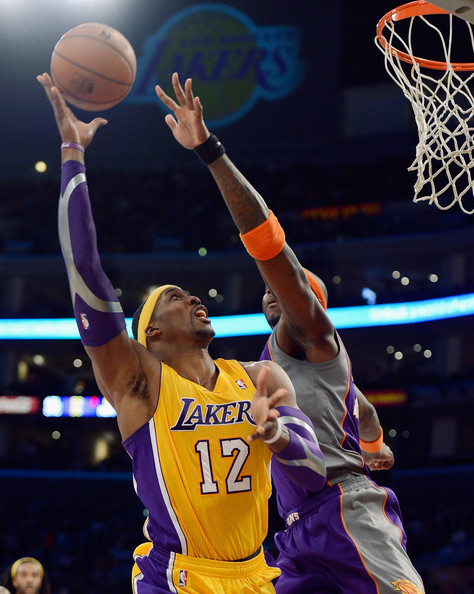
Andrew Snyder:  As a Celtics fan, I felt cheated by the Kobe injury. I love seeing that man fail of his own volition, not the catastrophic NBA injury gods’. Robbed of Lakers schadenfreude, although at least D-12 gave his all in the “looking like a classless a-hole” dept at the end of Game 4 to try and make up for Kobe’s absence.

Jairo Martinez: The Mamba is the closest thing to Jordan there is in the league. Once he sets foot in the playoffs anything can happen. Having Dirk and Dallas in the playoffs for the past decade feels like a blur. To think Dirk has only come away with one title is a shame.

4.  Take a guess: will your team be in the playoffs next season?

Alex Maki:  No. The West is too stacked, the Wolves players are too injury-plagued, and the Wolves front office is too incompetent. Ask me the question in two years or ten. My answer will probably be the same.

Hans Peterson:  Ugh. I don’t know what to say for this. I do think the Timberwolves will eventually take a little mini-leap and have an outlier year with a 7th  or 8th seed in the West and maybe win one or two playoff games. But even with all their best pieces (Love, Rubio, Pekovic, Kirilenko), they’d need things to go very well. They absolutely cannot handle a crippling 3/4 season injury to one or multiple of those pieces. So if I’m betting, no, they are not in the playoffs. If they snuck past Houston or LA I wouldn’t be shocked, however.

Symbol Lai: HA!  Every so often, Jacob will feel bad for my tortured existence and try to convince me that the Sixers aren’t really that bad off, but I’m kind of a harsh, realist so I’m always like NO WAY!!!  The Sixers are going to have to start over.  They have a lot of good pieces but not enough to push them into a deep, meaningful playoff run, even if it were through a big trade (that works out).  Though this is still up for debate, as a person tired of losing, I’m capitulating to ”the dark side.”  They need a superstar and, as of now, the organization doesn’t have enough draw to net a game-changer.

John Reyes-Nguyen: Yes.  The Lakers will definitely be in the playoffs and better than this year.  This year was worst than probably the entire Kwame Brown era.  I felt really giddy going into this year.  After Mike Brown was let go, I was fired (pun intended) up about getting PJ and talking some major trash.  But we hire D’Antoni and father time kicked our ass and that was that.

Andrew Snyder: Depends whether Danny Ainge blows up the Celtics or not. If Pierce and Garnett are both on the team, there’s no way the C’s are missing the playoffs in the [L]eastern conference. Even a Rondo on 1 ACL/Jeff Green/SULLY/FAB MELO lineup could probably snag an 8 seed in 2014.

Jairo Martinez: My Bulls are thankfully still in it and are the talk of the town with their “upset” of the Heat. I expect them to be competitive in the East. Having Tom Thibodou as their defensive guru will make them formitable. The biggest problem going forward is salary cap management to put a true title contender on the floor.

Posted in Wild Speculation and Outlandish Guesses | Leave a comment

Series of the Week: New York Knicks (2) versus Indiana Pacers (3)


There seems to be a tendency among humans to fetishize bygone eras in an attempt to elevate them over other epochs, namely, the one we are currently living in.  Colloquially expressed in the oft-uttered phrase “back in my day”, nearly every single distinguishable generation attempts to convince the generation(s) under them that their particular version of something — school, government, partying, sports, whatever,  – was the best version of that thing.  Furthermore, if they’re really rolling, they’ll use that idealized version of the past to explain how subsequent versions of that particular thing fail to match their efforts and accolades, and prove that their era was thinking about it the right way.  This tendency has few boundaries, and seems to be uniform across gender, nationality, class and creed.

Among NBA followers, there has been a recent celebration of  the 1990s were, for the league and its fan-base.  Exemplified chiefly through the reintroduction of the iconic jerseys of the decade, many NBA teams embraced their 1990s selves, thus allowing many fans who came of age in that eventful decade of basketball (sports, really) to embrace and elevate that particular epoch of sport.  Like Blake Griffin in his KIA commercials, we are happy to hop into a economic midsized sedan with time travel powers; excited to be ferried to a period where Michael Jordan ruled the land, when other brilliant stars carried lesser franchises to great heights, though never the final summit.  In our minds, John Tesh’s “Roundball Rock” serves as the “first call” to rise to duty, and Bob Costas’ dramatic monotone lays out the primary characters in the mid-day drama we will be witnessing in Chicago, New York, Indiana, Utah, Seattle or Houston.  Gone are the studio analysts of the present, preoccupied either with making us laugh at poorly-veiled potty humor, or using the number of commercials a player has to judge their relative greatness or anonymity.  These are the golden years, resplendent and gilded.

Indeed, there seems to be a collective effort among certain NBA fans to carve out a space where the 1990s can survive forever.  In that idyllic clearing, superteams do not exist, and superstars care more about winning in the city that drafted them rather than joining their friends in New York, South Beach or Los Angeles.  In this glittery fantasy land, teams play hard nosed defense as a rule, relying heavily on hard checks, deep scowls and surreptitious stiff-arms to carry them quarter-to-quarter, all the way to the final buzzer.  For the true believers of this era, regionalism matters, and the best matchups feature a brash, flashy team from a major market versus a scrappy upstart from a smaller midwestern town. Teams like the Clippers don’t become relevant because a star and commissioner can strong-arm them there, and teams like the Nets don’t make the playoffs just because they can plunge themselves into luxury tax hell for the next four seasons.  This version of the NBA is pure and untouched; a veritable Garden of Eden, adorned with juicy fruits of passion and lush leaves of verdant green.

For those who seek this mythical NBA — one that never really existed, yet has not ceased to exist, if that makes sense — there is refuge in the Eastern conference quarter-final series between the Indiana Pacers and the New York Knicks.  Of course, the Pacers-Knicks rivalry was one of the premier matchups in the NBA of the 1990s, meeting three times between 1993 and 1995, and three more times between 1998 and 2000.  It was the site of some of the most iconic moments of NBA history; one of the first “City Slickers versus Midwest Hicks” show-downs that could attract popular attention across a broad platform.  For those who associate visual images with particular time periods, the sight of seeing Pacers yellow challenging Knicks orange hearkens back to halcyon days of youth; a simpler game in a simpler time.  To have a reprisal of a late-historic matchup in the second round of the playoffs is a special treat for us traditionalists, and the fact that it’s occurring in the first place hasn’t been missed.

But for those of us who enjoyed previous versions of the game, and still enjoy the game today, this is a refreshing series as well.  At one time, the Knicks were trying to build their own Miami, attempting to find a third star to join a team led by Melo and Amar’e.  Those days have ended, with Amar’e on the bench, eternally rehabbing injuries that keep him from reaching his hypothetical zenith.  Instead, Melo is surrounded by a mix of playoff-tested veterans and hardworking younger players who have enough experience in big games to contribute.  Worries of them being too old, too injured or too mercurial have all but ceased, and despite their loss in game one of the series, the Knicks are still considered to have a chance to win it all.  The Pacers, meanwhile, are the pride of the Draft and Develop model.  Their stars have come chiefly through the NBA draft, not the free agent market or the trade deadline.  As a result, both teams become representative of an NBA that markedly separates itself from what has occurred in Miami, what tried to occur in Los Angeles, and what seems likely to occur in Houston (or even Dallas) this offseason.  They are teams that seem both counter-cultural to previous eras, yet at the same time, lock-in-step with their vaunted predecessors.  It’s an interesting contradiction that seems neither problematic nor confounding, and one that deserves our attention.

Patrick Henry once said that “[he] liked dreams of the future better than history of the past.”  In my opinion, the desires are not mutually exclusive, and must be informed by one another.  Recent histories of both the Knicks and Pacers are not terribly bright; laced with shameful accounts of publicized violence and thuggery and poor financial and personality management.  It is preferable to focus on the brilliant present and bright futures of both of the these teams, rather than assess the holistic pictures that include as much bad as good.  History isn’t just glitz and glamour; it’s an argument, based on evidence and assertions.  And with that in mind, it’s best to take a deep breath, celebrate the now, and watch two quality teams play defensively-minded playoff basketball live and in real time.

UVO, take me to 2013, where things are pretty good.

Posted in Series of the Week | Leave a comment

Monday Media: The Real Problem with NBA Awards Voting is the Voters, not the Process

Finally.

Finally a recognition of the absurdity of NBA awards voting is spreading.

Yesterday the NBA announced what everybody already knew would happen: LeBron James won his second straight MVP award. The surprising news was that James won near-unanimously, with a single holdout choosing not Kevin Durant, but Carmelo Anthony as MVP. This begat an immediate “who was the idiot that voted for Carmelo Anthony” parlor game, with the first suspect Miami radio host Dan Le Batard and his “it was me!” tweet.

As it turns out, Dan Le Batard was just having fun with hyper-reactionary Twitter users, and the lone Carmelo voter was The Boston Globe’s Gary Washburn.

Washburn’s vote—and his rationale for doing so—were dumb. His argument has already been picked apart on Twitter, and I’m sure those will be expanded by others into whole pieces highlighting major flaws in Washburn’s argument.

What’s more important than the individual vote are the cloudy layers of a byzantine process that Washburn’s vote represents. To Tom Ziller, his vote showcases the need to ditch anonymity granted to awards voters. To Tim Kawakami, the problem is that announcers, essentially team employees, are allowed to vote. Aren’t there clear conflict of interest problems there?

Ziller and Kawakami bring up important points, but they—and most others—are missing the biggest one: collectively, awards voters have no idea what the hell they are doing.

Every year, creative team front offices lobby awards voters in favor of their respective candidates. Back in the day the Chicago Bulls sent media members a package promoting Elton Brand for Rookie of the Year, and this year the Milwaukee Bucks sent members of the media toy blocks promoting Larry Sanders’ candidacy for Most Improved Player. Lest you think teams only sent out valueless jokes, in 2008 the Portland Trail Blazers sent national media members and coaches an “iRoy”: an iPod Nano loaded with video testimonials as to Brandon Roy’s all-star credentials.

I reached out to the major newspapers in every NBA market and asked sports editors how they handled gifts sent by teams to their reporters. Every editor that responded described some sort of policy that prohibited reporters from accepting gifts from teams, and many had newsroom auctions of these gifts to raise money for charity. Additionally, neither the Los Angeles Times or New York Times vote on awards.

Newspaper writers aren’t the only members of the media that vote on awards—the MVP press release says the voting panel “consisted of sportswriters and broadcasters throughout the United States and Canada”—but I’m going to hope (and assume) that all other media outlets have some form of policy that prohibits receiving gifts from subjects of coverage.

These policies mean that gifts sent from teams can’t be seen as bribes to vote a certain way. Furthermore, if you are going to be bribed I really hope you can extract more than a set of toy blocks as a concession. No, the promotional campaigns teams wage are to raise awareness of their candidate, which is quite problematic.

Elton Brand started 80 games as a rookie in 1990-00, averaging 20 points and 10 rebounds in 37 minutes a game.  Brandon Roy started 50 games before the All-Star break in 2007-08, averaging 20 points, 6 assists and 5 rebounds, dragging a fairly unremarkable Trail Blazers team onto the playoffs bubble. This year Larry Sanders averaged an absurd 2.8 blocks per game alongside 9.5 rebounds, and improved his offense enough to stay on the court long enough to become one of the most feared interior defenders in the game.

If Elton Brand wasn’t on your radar as a candidate for Rookie of the Year in 2000, you shouldn’t be allowed to vote.

If you hadn’t written about Brandon Roy as a potential All-Star candidate in 2008, you shouldn’t be a sportswriter.

If Larry Sanders didn’t merit serious consideration for Most Improved Player this year, you don’t deserve a ballot.

NBA marketing teams send out gifts because they are effective at raising awareness for their candidates. They’re effective because not every voter bothers to take a serious, analytic look at the universe of candidates. Many of the voters are beat writers or team broadcasters, meaning they watch one team play 82 games a year, rarely giving them the opportunity to study other teams. If one writer was able to screw-up what should have been the first unanimous MVP vote in NBA history—an award that features the most high-profile and nationally televised players—how flawed do you think the voting for more obscure awards are?

Awards voting isn’t the most serious problem facing the NBA, but it is an important one. Awards are one of the most important ways future generations of basketball fans will understand this one, and shambolic voting from media members distorts the historic record. In 30 years somebody will write that LeBron James was the “near unanimous” MVP winner in 2012-13. Readers will surmise that James had a pretty good season, not that he put together what may well be the best individual season in NBA history.

Ditching anonymous voting and disallowing team broadcasters from voting is a great start, but more fundamental changes to awards voting should be considered. Perhaps it should be coaches or players that vote on awards, not members of the media. Perhaps a select committee of national media members should vote on the awards instead of a hodge-podge grouping of local and national members. Maybe “Most Valuable Player” should become “Best Player” to end specious semantic reasoning. From the nine media members that shamefully left LeBron James completely off of their MVP ballot in 2011 to the person who (probably) accidentally voted Jordan Crawford for 6th Man of the Year because he was confused with Jamal Crawford, the voting process is rife with voting by people who aren’t qualified. That should change.

Posted in Monday Media | Leave a comment