Your Annotated Smartphone Bathroom Reader for Sunday, May 19th, 2013.

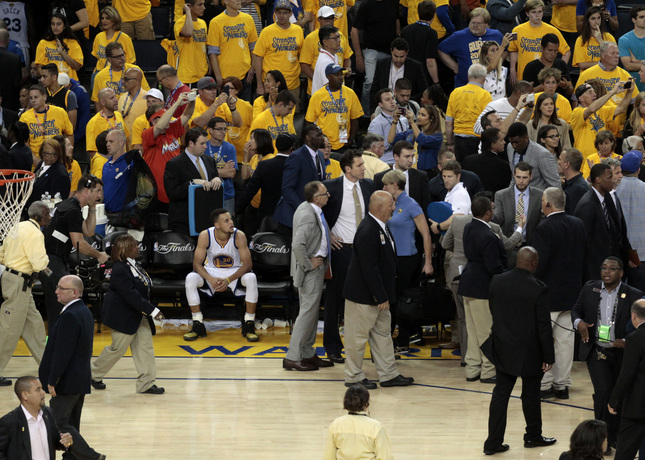
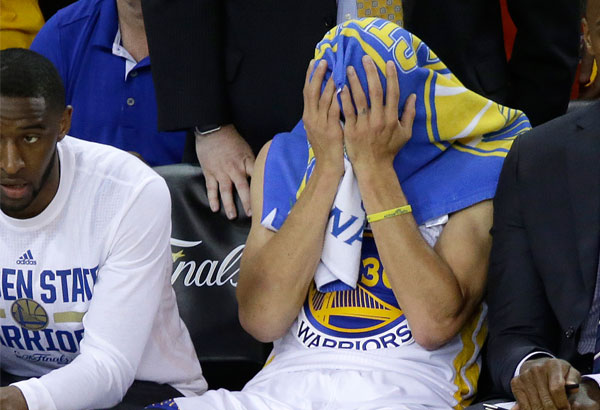
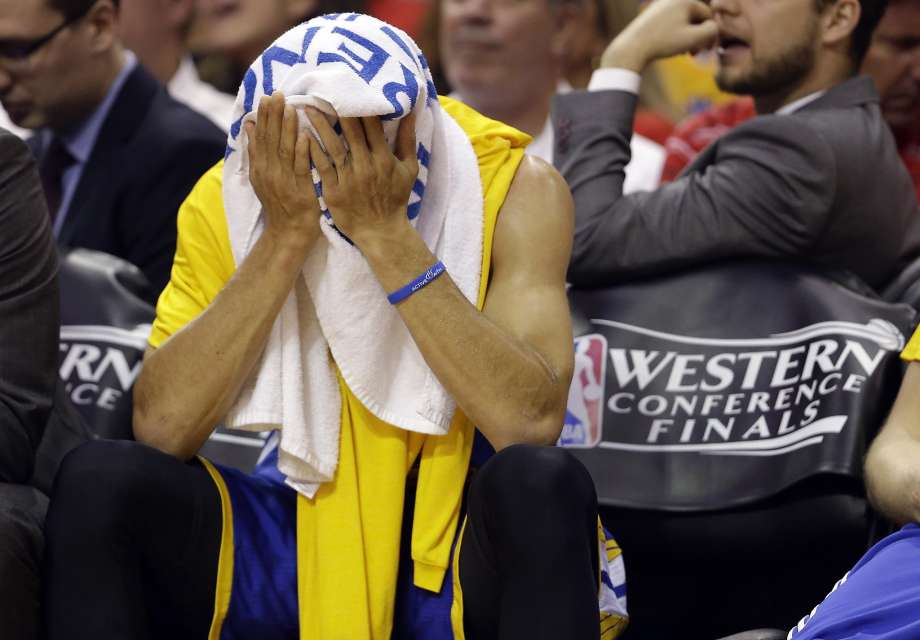
Post Warriors elimination, I’m watching more baseball than anything else.

The Jarrett Jack Complex
Kevin Draper
Hoopspeak

The Diss’ co-editor does his thing over at Hoopspeak, where the topic of conversation is Jarrett Jack, the Warriors backup…well, not quite point guard, but not quite useless chucker.  Draper does a deep exploration into the statistical conundrum that is Jarrett Jack, the Warriors hired gun who won equal amounts of praise and criticism this season for his occasionally inefficient play.  Draper points out that Jarrett Jack almost existed outside the rules for a team that used the three point shot and ball movement to succeed.  Instead, the Warriors lived (and occasionally died) on Jarrett Jack God mode, especially after Curry was hobbled.  It’s a smart analysis.  I’m in the Jarrett Jack camp, though.

- JG

The Decline and Fall of Unrealistic Sports
Drew Toal
The Gameological Society

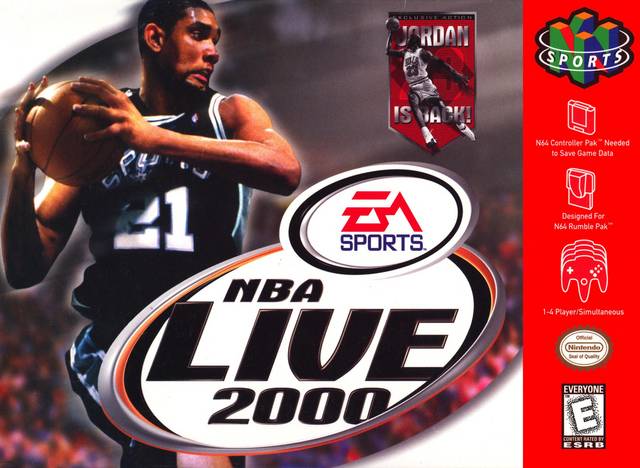
Y’all can’t touch me at NBA 2K.  No really, you can’t.  I am incredibly good at that game.  However, other less realistic basketball games, like NBA Jam or NBA Street?  I suck at those.  As Drew Toal argues, that’s really a sign of how far I’ve fallen.  Toal provides a comprehensive list of games that put fun and originality above realism, including NBA Jam, Mutant League Football and my personal favorite Arch Rivals.  All great games, but I still prefer 2K over all else.  Thanks to friend and (occasional) Diss reader Connor Cole for directing me to this piece.

- JG

The Kawhi Leonard Conundrum, and Why Life is Unfair
Andrew Sharp
Grantland

In this piece, Andrew Sharp brilliantly describes one of my least favorite parts of being a fan of (until recently) a bad team: watching a player you had a chance to draft succeed on a different team while the player you drafted struggles on your own team.  In this case, Sharp is examining Kawhi Leonard, who had a chance to play for Sharp’s favorite team, the Washington Wizards (they drafted Jan Vesely instead).  As Sharp watches Leonard turn into a star in San Antonio, Sharp wonders, essentially, why good players end up with good teams, while ho-hum players end up with ho-hum teams.  He asserts (correctly) that it is no accident that these arrangements occur, since teams that know how to win also know how to develop players.  For this reason, players like Chris Singleton remain useless on the Wizards, while guys like Jimmy Butler, Kawhi Leonard and Paul George look like stars-elect.  Indeed, good management matters.

- JG

Being Big, or Being Wilt Chamberlain
David Roth
The Classical

It is a common refrain now: centers are dead in the NBA.  I don’t think it’s true, though, for many of the reasons David Roth discusses here in this short piece for The Classical.  Big men in the NBA seem “self-conscious”; unsure of both their skills and their giant bodies.  Roth uses an animated interview of Wilt Chamberlain to highlight the role size and society play in the creation of 7-foot humans as both basketball players and human beings.  Roth correctly points out that while Wilt was a transcendent talent a mega-celebrity, a childhood of being huge left him sometimes feeling likelike a freak on a bus, who didn’t know what to do with himself”.  I often forget how large NBA players are even without their athletic skills.  Players like Andris deserve some love regardless of how they perform on the court.

- JG

A History of the American Basketball League
Robert Bradley
The Association for Professional Basketball Research

It’s a good thing I follow Bill Sharman on Twitter, because he pointed out this useful little summary on the brief life of the American Basketball League (ABL), an eight-team league that lasted for two years in the early 1960s.   The ABL formed essentially as a professional league for founder Abe Saperstein’s Harlem Globetrotters to play against, but had a lasting impression on the game.  The ABL featured Connie Hawkins (before he was a Globetrotter, and later an NBA/ABA stalwart), as well as Dick Barnett.  It also boasted the first ever African American head coach (John McLendon) in professional basketball, as well as the three-point shot, which was later adopted by the ABA, and subsequently, the NBA.  Sharman plays an important role in the history of the ABL as the only star-level NBA personality to affiliate himself with the league(as head coach of the ABL’s Los Angeles franchise).  This is a very interesting and informative read on the short history of a significant basketball league in the United States.

- JG

Posted in Annotated Bathroom Smartphone Reader | Leave a comment

Diss Guy Miss Guy, Vol. 40

Diss Guy: Dirk Nowitzki

It must’ve been a rough year for Dirk Nowitzki.  The guy missed the playoffs for the first time in over a decade, due chiefly to his absence for the first two months of the regular season after knee surgery.  He averaged just under 18 a game; his lowest since his rookie season.  His team finished only 41-41, and had to sport grizzly beards for most of the season (I didn’t mind).  And to top it all of?  He has to take a pay cut.  In a recent ESPN report, Nowitzki said that, if it meant getting both Chris Paul and Dwight Howard this summer in free agency, he would accept far fewer years and dollars on his next contract in an effort to preserve cap flexibility and build another contender in Dallas.  The story’s author, Tim MacMahon, quotes the Mavericks’ franchise player as saying, “It’s not about money. Obviously, Cuban took care of me for a long, long time. I always tried to pay him back by hard playing and being here for this franchise, so I don’t think we’re going to fight over money. I want to compete over these last couple of years. That’s going to be the goal.”

Now, we shouldn’t shed any tears for Nowitzki, and the man himself would not want us to.  As MacMahon points out in the story, only four players have earned more money over their careers than Dirk.  His $22.7 million salary next season will be second highest in the NBA, behind Kobe Bryant (who will likely miss some or all of next season).  And it’s not like Dirk has ever been required to stay in Dallas.  In fact, the last time Dirk took a “pay cut” from the Mavs (he could’ve taken a $96 million contract in 2010, and instead took a paltry $80 million contract) things ended up really well for them: they used the extra money on Tyson Chandler and won an NBA championship the next season.  History shows that things could work out in Dallas, and Dirk’s selflessness (as far as that exists when we’re talking about multi-million dollar salaries) tends to be a first step.

But for Dirk purists (which I’m not) this isn’t exactly the way we wanted to see his career end up.  Years of consistent playoff contention throughout his prime have led to a distinct dearth of young talent in the twilight of his career. Roddy Beaubois, the supposed future running mate for Dirk, never developed and looks about ready to flame out of the league.  Their current team of contractual mercenaries never gelled, and now look ready to spread their wings and fly to other destinations in the league where they can get a bit more financial stability.  Once again, it’s up to the Mavs front office and cacophonous owner to try and assemble a cast of free agents and desperate players just wanting another year of NBA money to try and get Dirk to the top of the mountain.  They must convince CP3 and Dwight — two players whose free agencies have now seemingly lasted three full seasons — to stop what they’re doing in Los Angeles and join Dirk and Mark in Big D.  It seems like a longshot.

While no window is ever closed in the NBA, this is undoubtedly a make-or-break year for Dallas.  There are more teams ascending than descending in the West’s top 10, and Dallas will need to have an excellent summer to keep pace with their other lower-seeded counterparts in the West.  If they are able to sign the right guys, and get themselves back into the conversation for who’ll win the West, it will come primarily from the efforts — and flexibility — of Dirk Nowitzki.

Miss Guy: Brian Phillips (Grantland)

Does everyone remember the bad years in Oklahoma City?  You know, when the team really was struggling on and off the court?  Sure, they had Durant, but they had all those terrible players who clearly weren’t part of the future, and were basically just collecting paychecks?  They didn’t win anywhere close to 30 games, and were perennial draft lottery attendees?  Man, things were really bad.  There was a certain stench of decay over the whole franchise.

Oh, wait.  Those days never happened in OKC?  Never?  Ever?

That’s right.  How could I forget?  The Thunder have never had bad days!  All of their bad days happened in Seattle, when they were the Sonics.  They arrived in OKC in 2009, had one year of development (KD was a sophomore, Russell was a rookie, and Harden was a senior [in College]), then got going with the business of winning 50+ games during the regular season (and even during lockout-shortened seasons).  Except for their first season of making the playoffs, they’ve won a series each year.  In 2012, they won the Western conference and lost to the Heat in the NBA finals.  Things have been pretty peachy keen in OKC, as long as they’ve been around.

So forgive me when I roll my eyes, deeply and purposefully, at Brian Phillips, and his petulant “life isn’t fair!” tantrum that came out on Grantland late last week.  I don’t frequently go after other writers (especially those who are actually paid to write about basketball), but this was just ridiculous.  Yes, the Thunder, his team, had lost to the Grizzlies, and were facing a longer summer break than any of their fans thought.  It is disappointing when your team doesn’t win its playoff series. But seriously, man:

“Losing makes you want to defend the people you love who’ve disappointed you. But you can’t say that stuff, because to the people who don’t feel the loss the way you feel it, you’ll sound like a moron, or worse, a mystic. When you lose, I thought as I joined the crawl toward the on-ramp, and you want to hold on to the past that you’re afraid is about to slip away from you, you have to say the opposite of what you mean. What Brooks should have told the media was not “Kevin Durant is pure of heart”; it was “sports is the worst and it sucks and I hate it.”

Well, “if sports is the worst and it sucks and [you] hate it”, perhaps you want to give your team back to Seattle.  If sports is the worst, you don’t have to have it.  Otherwise, relax, relative newcomer to the NBA.  I know it seems like successful basketball teams fall out of the sky in OKC, like rain falling solemnly in Seattle.  But you can’t win the West every year.  It just doesn’t work that way.  You just can’t always get what you want.

Posted in Diss Guy Miss Guy | Leave a comment

Russell Westbrook Fans: Stop Making Things Up

In picking over the wreckage of the Oklahoma City Thunder’s season, there is plenty of potential angles to chew on. Kevin Durant played pretty poorly. Kendrick Perkins is a terrible player and should be amnestied. Sam Presti traded James Harden away prematurely. Scott Brooks couldn’t make adjustments and played Derek Fisher way too many (read: more than 0) minutes. Patrick Beverly ran into Russell Westbrook’s knee.

Of all the contributing factors to the Thunder’s demise, it’s the last one I want to look at more closely. In Game 2 of their series against the Thunder, the Rockets’ Patrick Beverly made a rash attempt at a steal, colliding into Russell Westbrook’s knee and tearing his meniscus. Ever since the Thunder haven’t looked particularly good, going 3–6 in Westbrook’s absence, a far cry from their 60–22 season record.

Westbrook is one of the league’s most divisive players, some believing he is the fifth best player in the league and others asserting that he takes too many dumb shots and should pass to Kevin Durant more. With Westbrook’s injury clearly having been a huge factor in that 3–6 record,  the “Westbrook should pass the ball more” argument is under attack.

As far as I can tell, the extended argument is this: because the Thunder generate poorer shot attempts and aren’t as good without Russell Westbrook on the floor, he shouldn’t be criticized for the bad shots he takes. To be frank, that’s pretty stupid.

People have conflated criticism of Westbrook’s game with thinking he’s a bad player, an argument that hasn’t actually ever been made. Nobody remotely intelligent thinks Russell Westbrook is a bad player. I probably have one of the more extreme pessimistic views of Westbrook’s worth on the court, and in a long piece before the season began I wrote:

It is pretty clear that saying Russell Westbrook is the 9th best player in the league is quite an overreach; 30th seems to fit better, and I could be convinced that 50th is right.

According to Wins Produced, the all-encompassing player rating statistic that most heavily punishes volume shooters, Westbrook had a .144 WP48 this season. That isn’t superstar territory, but it is certainly better than average, which is .100.

A pessimistic analyst and an unfavorable rating system agree that Russell Westbrook is an above average player, and that’s the low end of the value spectrum. When you trade in “above average” for “Derek Fisher” of course your team is going to struggle to get good shots: Russell Westbrook is pretty good at basketball and his backup is not! Of course you’d rather have Westbrook’s shooting (not to mention his passing, rebounding and defense) than Fisher or Reggie Jackson’s.

What that doesn’t mean, however, is that Westbrook’s 44 FG% or 32 3P%—or the fact that he takes three more shots per 36 minutes than uber-efficient and deadly Kevin Durant—should be off-limits for questioning.

Posted in General | Tagged , , | Leave a comment

No Playoffs for Old Teams: National & Cable TV Playoff Rankings

The regular season is over, but out interest in watchability is not. The playoffs change a lot of things, including making some teams that weren’t very watchable, watchable, and others are one small injury or coaching decision away from being skipped for dinner.

1. Golden State Warriors

The runaway most exciting team to watch these playoffs for this (biased) committee of two. Stephen Curry’s ascendance to superstardom is the obvious story to watch, but whether it is Bogut’s improving health, Harrison Barnes playing better than he has all season or Draymond Green rediscovering a stroke that deserted him for 82 games, the key to the Warriors’ watchability is that every player is individually mesmerizing, combining for an awesome explosion of three-pointers, dunks, fast breaks and surprisingly stifling defense. Oh yeah, and playing in the loudest arena in the NBA doesn’t hurt.

2. Memphis Grizzlies
The style of play that prompted me to say “okay, okay, just have the fourth seed” back in February has become emblematic of how these playoffs have sort of run themselves. The Grizzlies are playing the second best defense in the playoffs (behind the Indiana Pacers) and almost every single rotation player has begun to sharply hone their offensive contribution to the overall effort. Of course, Z-Bo and Marc Gasol’s two-way post dominance has been impressive to witness. Tony Allen’s never-say-die defense on both Chris Paul and Kevin Durant has been a joy to watch as well. But don’t sleep on the way Mike Conley runs his team, and don’t miss out on the spirited efforts of role players Jerryd “Baby Boozer” Bayless, Quincy Pondexter and Darrell Arthur. For all the folks who feel good about picking the Grizzlies as a sleeper to come out of the West (hint: almost everyone, so don’t get too excited), congratulations.

3. San Antonio Spurs
If you expected poetic waxing about ball movement and team play, you probably haven’t been watching these playoffs too closely. That may have been the story against an undermanned and exhausted Lakers squad, but against the Warriors the Spurs haven’t exactly stuck to the script. They won one game because of the most sublime four minutes of basketball you’ll see, another because Tony Parker became an efficient high-volume shooter, and a third because of a brand of clutching and grasping defense that was honestly beautiful to watch. These aren’t your father’s Spurs, and that’s a good thing.

4. Denver Nuggets
Don’t let the first round collapse fool you: this was an entertaining as all hell team to watch. Most entertaining perhaps was the Nuggets frenetic trapping, which either led to a steal and fast break or a series of pretty Warriors passes for an open shot. The schadenfreude of watching George Karl be outcoached when you knew he was about to win the Coach of the Year award was also fun.

5. Chicago Bulls

The Bulls may be the first team in history where adjectives like “heart”, “hustle” and “grit” are a. entirely accurate, and b. not subtlety pejorative. Even when they’re losing by fifteen, every game has a slight “Game 7″ aura because of the manic energy emanating from the Bulls.

6. Miami Heat
Low key Depressing: the utilitarian streamlining of LeBron’s playoff game. No glitz. No glamour. No threes. No huge dunks. Just patient post play, smart jumpers, and endless facilitation. This first-world basketball problem, plus D-Wade’s knee injury, and the fact that the Heat rotation looks about as competent as they always have leads to this slightly lower ranking.

7. Indiana Pacers
Call me crazy, but this team reminds me a lot of the mid-2000s Spurs. Defense is their calling card, and while the offense isn’t the most efficient, they move the ball well and have a power forward that stretches the defense with outside shots. They are extremely well-coached, and seem to never miss a defensive rotation. Like the mid-2000s Spurs their beauty isn’t immediately apparent, but it is in there somewhere.

8. Houston Rockets
Here’s how unentertaining these playoffs have been: Jeremy Lin got injured and James Harden got strep throat, leading to Patrick Beverly playing many minutes and frequently running the offense, and the Rockets were still one of the more entertaining teams.

9. Los Angeles Clippers

As much as the Clippers tried to paste over it during the regular season, Vinny Del Negro just isn’t a very good coach. No two ways around it. What was unexpected was the apparent tension that has developed between Chris Paul and everybody else on the team. A fun story for the dog days of April, but it sure didn’t lead to pretty playoff ball.

10. Brooklyn Nets
The Brooklyn Nets were the second-most enjoyable team to watch in the most un-celebrated seven-game series since the 2007 NBA Finals that no one watched. In the end, the main complaint wasn’t the players, style of play, arena, or anything else. It was the energy. The Nets looked disappointed to be in the playoffs; like it was interrupting their favorite part of summer break. Don’t blame em’: the first month of Summer Break is the best. Sleeping in until 1 pm. Leaving the lights off in your room all day. Great times. The Nets should hire someone who can get these guys to play with a little oomph and at least pretend that they enjoy playing basketball.

11. Oklahoma City Thunder
Minus Russell Westbrook, you’re really just watching to see if Kevin Durant can rip off a 50/15 game at this point. The worst thing about the Westbrook injury is that it has given Scott Brooks more fake-justification to subject Derek Fisher upon us, a loss for all true basketball fans.

12. New York Knicks
What the hell happened to the regular season? I know the team has had some injuries, but they had it figured out. Shoot a ton of three-pointers, keep Melo at the four and have him play semi-efficiently, and play generally competent basketball. All of a sudden Carmelo has regressed and is chucking up shots, the shots that J.R. Smith always chucks up aren’t falling, and Mike Woodson has gone away from Carmelo as a stretch 4 and is using baffling rotations. I’d prefer to spend my time watching the Knicks, not scratching my head trying to figure out what is going on.

13. Boston Celtics

They looked old last season until an inspired playoffs run, they looked really old this season, and surprise surprise, they looked really old in the playoffs. With Paul Pierce now stating that he expects to be traded or released, hopefully you were able to get your Celtics fill.

14. Los Angeles Lakers
I can’t believe that, in the end, after everything, the Lakers got essentially a free pass due to the injuries that curtailed their projected 73-9 season, and undefeated march to the championship. A Dwight temper tantrum, Pau Gasol’s best Andris Biedrins impression (“I swear I used to be good, promise!”), and Darius Morris as your starting point guard were all we got out of the Lakers this postseason. And with the resolution of Dwightmare II still six weeks away, this team will continue to be more fun to watch off-the-court than on it.

15. Atlanta Hawks
That’s what terrible guard play looks like. People slag the Grizzlies guard lineup, but the Hawks would be positively joyous if they they had Mike Conley, Tony Allen and Jerryd Bayless. From a pure aesthetic perspective, if you are only going to have good bigs or good smalls, you want the good smalls. Jeff Teague is why Josh Smith dribbles the ball too much. Kyle Korver is why Josh Smith shoots too many midrange jumpers. Who thought Louis Williams’ absence would be felt so heavily?

16. Milwaukee Bucks
Thank god this dog was put down. For the love of all that is holy, I hope that not-very-competent GM John Hammond lets either Monta Ellis, Brandon Jennings or both of them walk away this offseason. If both end up on the Bucks next year, I promise that they will earn a permanent number 30 position in all future league pass power rankings.

Posted in No Country for Boring Teams | Leave a comment

Series of the Week: Oklahoma City Thunder (1) versus Memphis Grizzlies (5)

“We have a pretty good team.  Just got hurt.”
David Kahn, ex-GM of the Minnesota Timberwolves

The above statement has nothing to do with either the Thunder or the Grizzlies.  Rather, it concerns the Minnesota Timberwolves, the team that David Kahn oversaw for four seasons until he was ousted a week ago.  In his exit interview, he summed up his performance as the primary team-builder of the Wolves with the quote that leads off our discussion today.  By his estimation, he had assembled a worthy team, just one that couldn’t stay healthy.  And while one might question Kahn’s thought process in signing players that had lengthy injury histories (Darko Milicic, Josh Howard, Brandon Roy, Martell Webster, to name but a few), there wasn’t a lot to argue.  Indeed, his good team had gotten hurt.  Moreover, his presumptive star, Kevin Love, was injured as well.  Given that Love is the Timberwolves’ offering as “potential superstar”, the fact that he was not able to help lift the team through a tough injury stretch (and perhaps by extension, save Kahn’s job), it isn’t surprising that Kahn, as Jerry Zgoda put it, won’t be “kept up at night.” His team was good.  It just got hurt.

Kahn’s somewhat reductionist quote got me thinking, though.  I have spent a lot of time this season discussing what, exactly, makes a superstar, and how they are created and celebrated, not just by their teammates, but by their fans across the globe.  Addtionally, I have thought a fair amount about the power and meaning of injury in the NBA, and what playing through injury, and in some cases, succeeding through injury, means for both individuals and groups in the NBA.  Throughout the season, I looked at teams that managed to succeed in the face of staggering injury, as well as teams that struggled to overcome a particular ailment or ailments.  I came to no consensus on either subject.  I cannot point to any essential definition of what, exactly, a super star is, nor could I definitively say what makes a good team that gets injured remain good, or crumble under the weight of their own bodies and job duties.

Now, I can say with certainty that Kevin Durant is a superstar.  This is a point that has been well-established and does not require further discussion.  There is little original information I can add to a player who is universally regarded as one of the top players on the planet, and whose worth has been measured many times over.  Kevin Durant, to me, is enjoyable to to watch on the court, seems pleasant enough off of it, and I am unmoved by his many commercials.  The next ten years with Kevin Durant will be exciting, and before too long, we’ll fully appreciate what he represents.

But his team?  The Thunder? Now, because they were a good team that got hurt, we have questions.  The Thunder, of course, are deeply missing Russell Westbrook, lost to a torn meniscus in the postseason’s opening round.  And while a team with Kevin Martin, Serge Ibaka, Reggie Jackson, Nick Collison and Kendrick Perkins can stay competitive, they do not appear to have quite enough to defend their conference championship.  This was put on display last night.  In the third game of the series, the Thunder gave away a 17 point lead over the course of the second half, eventually losing  to the Grizzlies 103-97 in overtime.  Kevin Durant delivered his typical stuffed stat line  – 27, 7 and 7 in 48 gritty minutes — but the Grizzlies’ full team effort eventually overwhelmed the Thunder, for a third time in a row.  A three game losing streak is almost always a sign of concern, but especially so when it comes during a playoff series.  The Thunder trail in the series 1-3, and must win three in a row in order to advance to the conference finals.  Historically, the 3-1 team wins 96% of the time, thus stacking the odds against Durant and the Thunder.

It seems fairly assured that, regardless of the final outcome of the series, Kevin Durant will get something of a free pass for the 2012-2013 season.  Indeed, going by the meteoric expectations that were set for him at the beginning of the season, Durant may have fallen just a few notches short.  Though he got his typical All Star berth, and seems likely to be an  All NBA First Teamer for the third season in a row, he got zero first place votes for MVP.  Nevertheless, Durant won widespread adoration for his labor this season, and deservedly so.  The truth was that LeBron had a season unparalleled, and Kevin Durant clearly was the second best player in the league.  That is more than enough for most, at this moment.  For a superstar who chose early to extend with his team rather than “experience” (the verb most players seem to prefer) free agency, potentially creating a Decision-like atmosphere around his small-town team that has known nothing but winning and wise-beyond-their-years professionalism since arriving in Oklahoma City, he is already following a much different path than his peers.  Indeed, there will be neither Kevinsanity nor a Not Nice free agency tour for KD.  His future seems tied to Oklahoma City, as long as they stay competitive, and continue to guide the franchise in the right direction.

But now, perhaps, that has come into question. Kevin Durant’s brilliant year does not hide the fact that, once a good team got hurt, it could not survive against a defensively minded team like the Grizzlies..  The Thunder are poised to fall in the semifinal round, their earliest exit from the postseason since they lost to the Lakers as the eighth seed in the first round of the 2010 playoffs.  Doubters who decried Sam Presti’s trade of James Harden to Houston have found their voices again, as Kevin Martin produces numbers similar to Harden’s (never a problem in his career) but seems to lack the stage presence and transcendent skill-set of the current Rockets star.  Serge Ibaka came out of his shooting struggles in last night’s losing effort, but in many ways, the damage done by his offensive truancy had already been done.  Kendrick Perkins’ has been more of a burden than a boon in this series.  Derek Fisher seems about done.  And though Nick Collison and Reggie Williams have done what they can do, they are not Russell Westbrook.

The final few minutes and overtime period of Game 4 emphasized the highs and lows of superstardom, especially on a team like the Thunder.  In the final minute of the game, with the Thunder tasked with scoring a bucket to force overtime, Durant got the ball stolen by Z-Bo, and then was beat to a defensive rebound on the other end by Mike Conley.  With the game seemingly over, the cameras lingered on Durant, whose slight shoulders remained high, and whose face remained focus.  It was hardly a surprise that when Durant got the ball back — who else was going to take the shot? — he went right to the hole with a patented finger roll, and tied the game at 94-94.  Like a superstar should, he got his team into the position to win, through his transcendent talents.  But in overtime, when he needed help, the Thunder could not rise to the challenge.  In many ways, it served as a microcosm of for the whole series.  Indeed, had Durant not hit a go-ahead basket with about 10 seconds left in Game 1 of this series, the Thunder would’ve been swept last night in Memphis.

With that in mind, there be no more compelling time to watch Kevin Durant than right now.  As David Kahn said on the way out the door, even the good teams get hurt.  This cannot be avoided.  But there is a chance — albeit a small one — that Durant can embrace the fact that, at this point, he has little to lose.  Games five and seven are in Oklahoma City, where KD is his most dangerous.  Though history is against KD and his team, there is a chance that Durant is just that good.

But he has to win tomorrow.  Or else, we’ll have to sum up the Thunder season with a cop-out excuse from a former GM: a pretty good team that just got hurt.

Posted in Series of the Week | 2 Comments

Monday Media: The Many Melodramatic Layers of a Picture

This is a picture of Kevin Durant wearing a hat.  This we can agree on.

But after that?  Well, it’s up to you.

My guess is when a person from Seattle sees the picture seen above, they mostly feel sad.  There are the obvious reasons — the last franchise player for the SuperSonics, wearing a nice classic snap-back depicting the colors and icons of the defunct franchise — but there are other reasons, as well.  It’s somewhat jarring to see the green hat perched atop the head of the Thunder’s past (which doesn’t exist), present and future as he wears the practice garb of the team the Sonics became.  Indeed, Kevin Durant’s exploits as a Sonic happened while he was a dazzling but imperfect rookie, youthfully playing while the team trudged its way in the through a grouchy, dour final season in Seattle. It’s not a terribly pleasant experience to immerse oneself in the realities of the brief Kevin Durant era in the Pacific Northwest, while at the same time, pondering what could have been if the stewardship of the Sonics had been more responsible, and the NBA was a much different place.

At the same time, a person from Oklahoma City might see this picture, and angrily say to themselves, What the hell, man?  No, the arrival of the team in the lower midwest (or, northeastern south? The eastern southwest?) was neither clean nor celebrated.  But hey, the team’s there, now.  It had a good run in Seattle, but now it’s in a place where it suffers through nightly sell-outs, national television appearances, and deep runs into the postseason.  The present is mighty fine, indeed, and Kevin Durant is a –if not the – major reason why.  To see KD wear a Sonics hat while he represents Oklahoma City (in the playoffs, no less) must feel a bit like seeing a new spouse wearing the wedding ring from a previous marriage.  Wear a Mariners hat, if you mustthat person from Oklahoma City might mutter, their mouths turned down in disgust.  But don’t wear a Sonics hat.  Be better than that.

But even more bizarrely, a person in Sacramento might see this picture, and feel anything from panic to frustration.  The battle for the Kings rages on (even as we speak), and through a remarkable series of events, California’s capitol city has become the sacrificial alter where a capitalist Binding of Isaac will almost certainly take place.  The outcome of this conflict is not known — despite what any source says, or any fan angrily declares, no one can predict the actions of millionaires and billionaires when actual money is at stake — and is not likely to be known any time soon.  But people still try and find meanings etched on walls, dropping lazily to the ground like tea leaves.  Surely there’s a meaning in KD wearing a Sonics hat, especially on this day, while the NBA and its shareholders meet in New York City to continue the discussion on how the execution of the Kings as we currently know them should be carried out.

A picture of Kevin Durant, taken on a mobile device, posted on the internet.  A simple, modern thing, really.

Yet, it is truly interesting how a picture depicting a singular image can carry so many meanings, for so many different people.  That, thankfully, will never change.

Posted in General | 2 Comments

Your Annotated Smartphone Bathroom Reader for Sunday, May 12th, 2013.

null
Maloofs Employ “Plan Middle Finger”
Ray Ratto
CSNBayArea.com

On Sunday, just when it seemed like things were wrapping up with the sale of the Sacramento Kings from the maligned Brothers Maloof, things went nuts again. Not only did Chris Hansen up the value of his bid by $70 million dollars (raising the price to a $625 million dollars, which is higher than the GDP of a number of nations) and the relocation fee, but the Maloofs let it be known that they will not accept the bid offered by Vivek Ranadive, the city of Sacramento and the NBA. Instead, they will offer 20% of the Kings to Hansen, and sour the relationship between the harassed fanbase and the team. Ray Ratto summarizes the proceedings nicely here. As he correctly points out: “the Maloofs are telling Sacramento at the moment of its greatest imagined triumph that no one can put a price tag on spite.” Go Ray!

–JG

Waiting in the Wings: Adam Silver
Paul Rogers
Sonics Rising

In February 2014, right after All Star Weekend, NBA commissioner-elect Adam Silver will take the wheel from out-going commissioner David Stern, and assume control of the multi-billion dollar corpration and global brand. When that happens (and depending on what happens with the Sacramento Kings), the biggest question for the new commish will likely center on the prospect of expansion, in Seattle and elsewhere. Will Adam Silver revisit the possibility of expanding the league? Paul Rogers does a close investigation into various secondary sources in an attempt to make an assertion. He concludes that while Silver’s attachment to his mentor and boss is troubling for traumatized Sonics fans, Silver generally seems more amenable towards seeing franchises as “public trusts” rather than simply assets that can be bought, sold and moved. This is useful work from Rogers.

–JG

Racial Discrimination Among NBA Referees (2007)
Joseph Price & Justin Wolfers
National Bureau of Economic Research

I happened across this paper while surfing the internet, and I will have to reread it a number of times. In the journal-length article, Price and Wolfers assert that, when it comes to winning — quantified through the relative calling of fouls — that ” these observable game outcomes are themselves the product of biased evaluation by referees.” Additionally, they assert that, “in light of the mismatch between the composition of the players (around four-fifths of whom are black) and their evaluators (around two-thirds of referees are white in our sample), an own-race preference may drive an aggregate bias against blacks (or for whites).” In my first reading, I was impressed with the depth of Price and Wolfers’ analysis. They include an impressive amount of data about biases with black and “white” (including Asian and Hispanic) players and refs, and reference a wide range of sources. At the same time, it seems problematic to try and quantify “racism” through foul calling. Nevertheless, it is, without a doubt, the most ambitious analysis I’ve ever seen in regards to quantifying racism, and among the most unique uses of professional basketball as a lens to observe society-at-large in any context, journalistic, academic, or otherwise.

–JG

We Don’t Live Here Anymore
David Roth
The Classical

As one of Jersey’s native sons, David Roth is unimpressed with the new Barclay’s Center, “the whole fakey-fake branded enterprise and the artsily distressed metal edifice on Flatbush”. From Jay-Z’s (previous) involvement with the team to the black jerseys and piped in arena sounds, the entire thing just feels forced. What separates Roth’s analysis from the multitudes noting a similar feeling is his understanding of how community is built. As he writes in the subhead: “The Brooklyn Nets are a mediocre, tacky, and mostly heart-free basketball team. But give them time.”

–KD

The Nassau Coliseum Was Not A Dump: What The Isles Are Leaving Behind
Sam Page
Deadspin

Soon, the Brooklyn Nets won’t be the Barclay’s Center’s only tenants. Sometime in the next couple years the NHL’s New York Islanders will play their final game at the Nassau Veterans Memorial Coliseum and move 20 miles west to Brooklyn. Sam Page—whose grandfather helped build the building and worked for the team—beautifully chronicles what the final few years of “progress” looks like, and how the departure of the Islanders will rip out whatever soul Long Island ever had.

–KD

Posted in Annotated Bathroom Smartphone Reader | Leave a comment